What does nonsurgical decompression mean?
The term is commonly used for mechanical spinal traction. Equipment applies a controlled pulling force while you’re supported on a treatment table. It is different from a surgical decompression procedure. We’ll explain the setup and discuss the potential benefits, risks and alternatives before treatment.
A closer look
What is the pulling motion intended to do?
Traction applies a controlled pulling force. This simplified view shows how a disc bulge can crowd the spinal canal and an exiting nerve. Move between the illustrated positions to compare contact with more space.
The cord is extended here for clarity; this is not a level-specific anatomical view. It normally ends in the upper lumbar spine, with nerve roots continuing below. The particles use a traffic-jam analogy to show crowding near the disc bulge and the difference below it. They do not show blood flow, spinal fluid or measured nerve activity. Colors do not measure inflammation, circulation or nerve function. Anatomy and movement are exaggerated, not a prediction of your treatment response.
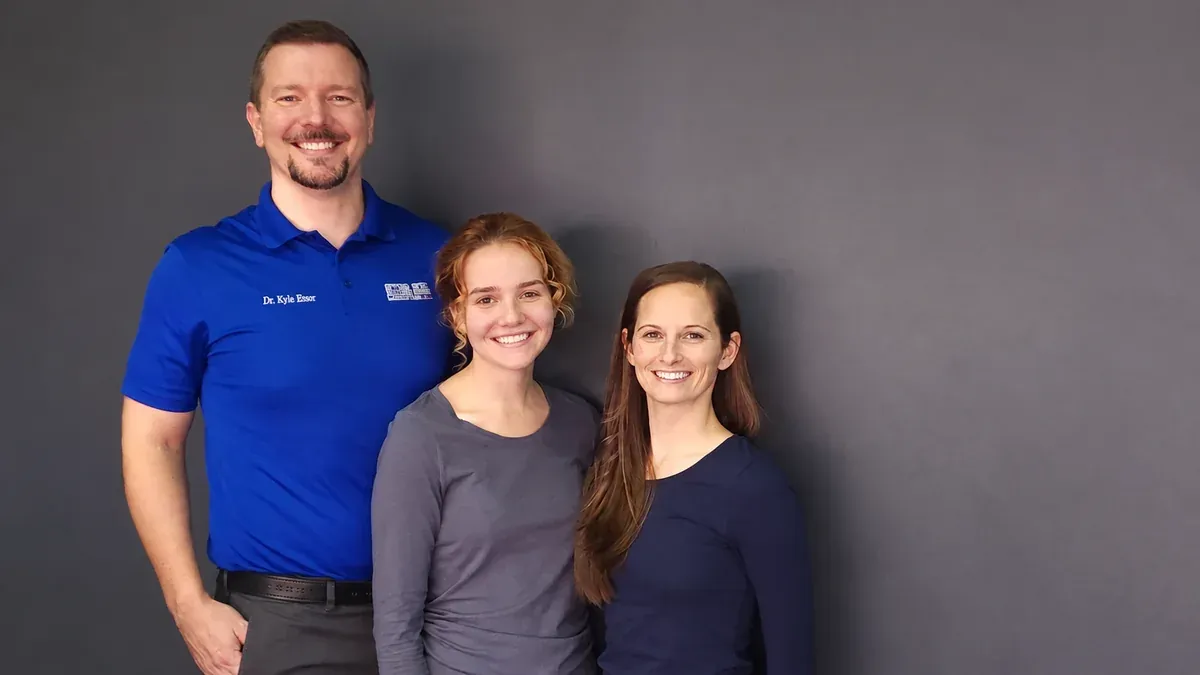
Why I offer decompression
Weightlifting, bodybuilding and combat sports have been part of my life for years. As a young man, a weightlifting injury left me unable to use one leg for nine months. A bad headlock also caused a pinched nerve in my arm and a loss of strength. Decompression helped with both injuries and helped me regain the strength I’d lost in my arm. For me, it helped more than any other treatment I tried. That’s a big part of why I offer it here. That is my experience; yours may be different. We’ll start with an evaluation to see whether it fits your situation.
Start with your symptoms and examination
We start with a detailed history and your pain pattern: where symptoms begin, where they travel, and which positions or activities change them. Dr. Koser connects that information with physical and neurological findings, posture and movement. Existing imaging is reviewed, and new X-rays are considered when clinically appropriate. A diagnosis such as a bulging disc or degenerative disc disease is part of that picture; it does not decide the treatment by itself.
What a visit involves
- STEP 01
Talk through the findings
Discuss what the examination suggests, whether more information is needed and which options fit your situation.
- STEP 02
Set up the treatment
If decompression is recommended, we explain your position and select the settings. At OSC, equipment time starts at 11 minutes and progresses to 15 minutes as appropriate. Setup and other care take additional time.
- STEP 03
Review your response
Tell us how you felt during and after treatment. Discuss what has changed and whether the plan needs to be adjusted.
Exercise can be part of your plan
Dr. Koser usually recommends a customized McGill-based exercise series for low-back care when appropriate. Your exercises are selected for your condition and ability. The aim is to give you clear, manageable work to practice between visits.
What progress can look like
The immediate goals are less pain and easier movement. We also want to understand whether you can do more of the things that matter to you, such as sitting through work, walking or returning to exercise. Tell us what changes during treatment and between visits. We use your response and reassessment to decide whether to continue, adjust the plan or consider another option. Decompression does not guarantee disc repair, reversal of degeneration or avoiding surgery.
What if decompression is not the right fit?
We’ll explain why and talk through the next step. That can mean a different approach within the clinic, more information or assessment by another clinician. If symptoms are worsening or you’re not making useful progress, the plan needs another look.
Keeping the progress you make
Exercise, daily habits and a plan you can follow between visits can be part of ongoing care. Recommendations depend on your needs, goals and response. Some people need a change in the plan as they improve; others need further assessment. We do not put everyone on the same long-term decompression schedule.
Inside the clinic
A look at the setup.
These images come from our clinic’s decompression demonstration. Positioning and supports are selected for the individual.
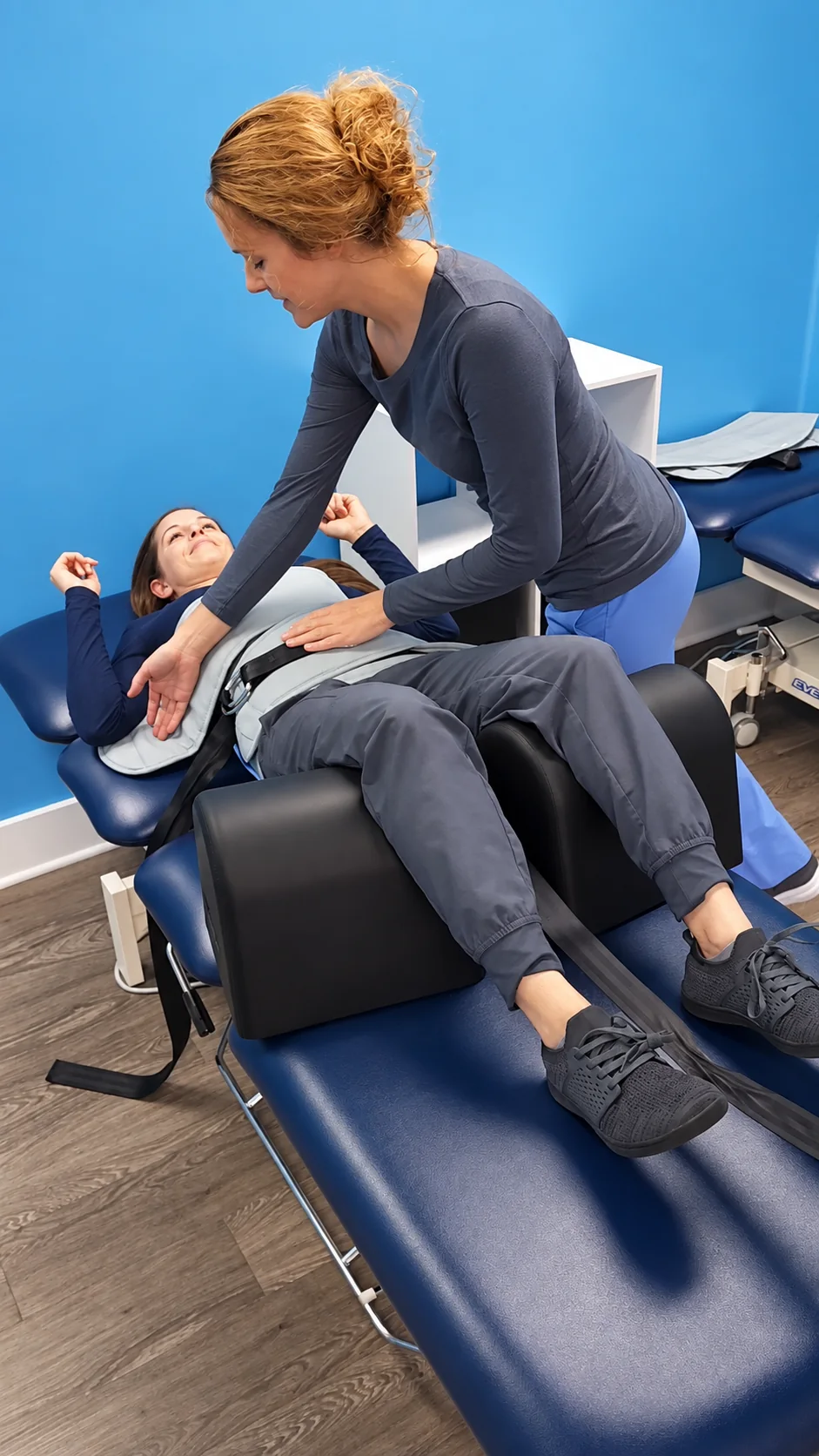
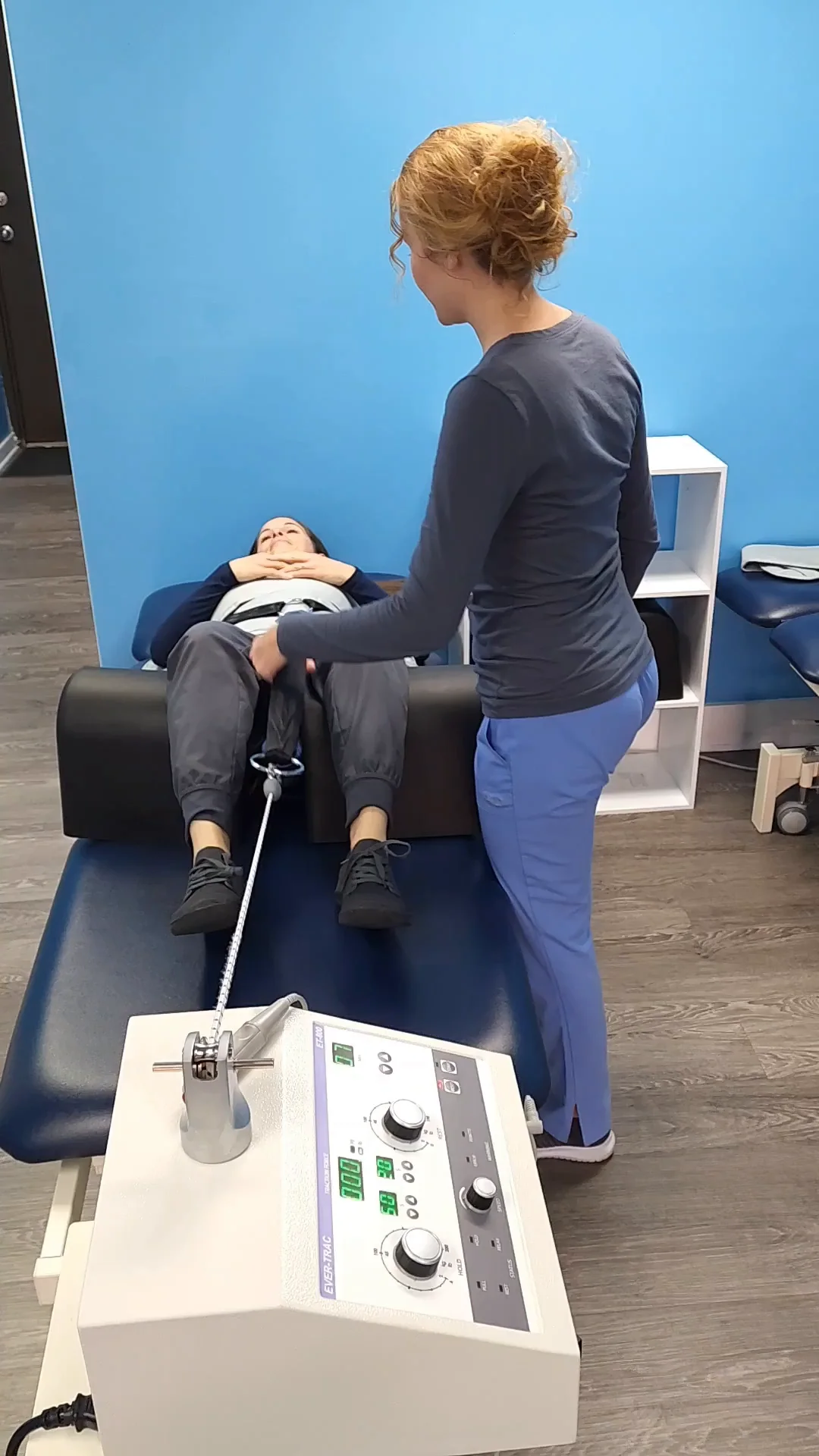
View the table illustration
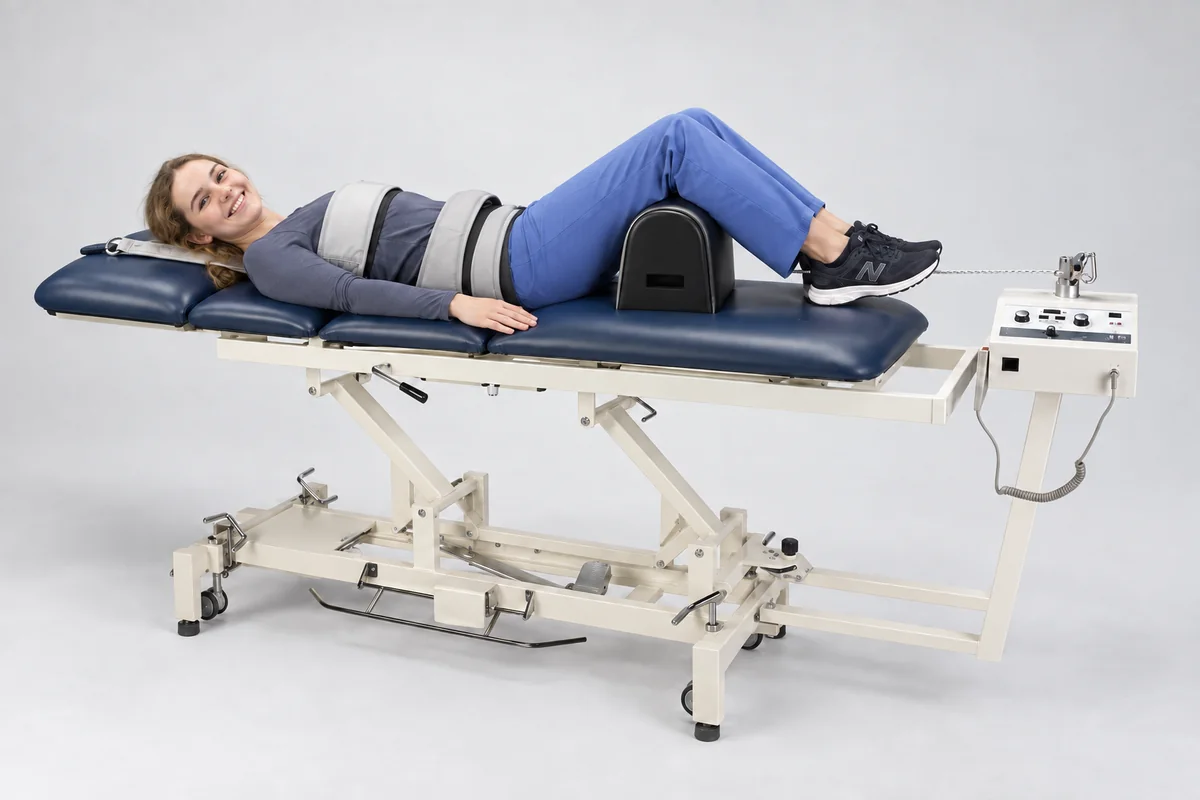
Illustrative mockup based on our table and a staff photo; not a photograph of a treatment session.
Before you visit
Your questions, answered.
Do you offer neck decompression?
Yes. Dr. Koser offers decompression for both the neck and low back. Your examination guides whether either is appropriate.
Does it hurt?
Comfort and response vary. Tell us right away if treatment causes discomfort or worsening symptoms so it can be reassessed.
How long will I be there?
Time on the equipment starts at 11 minutes and progresses to 15 minutes as appropriate. That is not the total appointment time. Call the office to discuss the time needed for your visit.
How many sessions will I need?
There is no visit count that fits everyone. Your findings and response guide the recommendation. Ask what will be measured and when the plan will be reassessed.
Do I need imaging first?
Bring any imaging and reports you already have. Dr. Koser considers them alongside your history and examination and explains whether new X-rays or other assessment would help answer a clinical question. Imaging is one part of deciding whether decompression is appropriate.
Is a home inversion table the same thing?
The equipment, positioning and supervision differ. A home device is not a substitute for an assessment, and we don’t recommend choosing one solely from symptoms described online.
How do I request an evaluation?
Use the clinic’s appointment-request form or call the office. Staff confirm your preferred time by phone. A submitted request does not reserve an appointment.
I’ve tried other care. What would you look at?
Tell us what you tried, how long you tried it and what changed. We’ll look again at the pain pattern, strength and sensation, movement and relevant imaging. That helps us understand what has already been explored and whether another approach or a referral makes sense. Previous treatment not helping does not tell us that decompression will work.
What does the evidence say about lumbar traction?
Evidence for lumbar traction is limited. NICE, a UK guideline body, advises against traction for low-back pain with or without sciatica. We discuss that limitation alongside your findings, alternatives and preferences when considering care.
What happens if it does not help?
Tell us what has and has not changed. Dr. Koser reassesses the symptoms and relevant findings, then discusses changing or stopping the approach, further evaluation or referral. A plan should respond to what is happening with you.