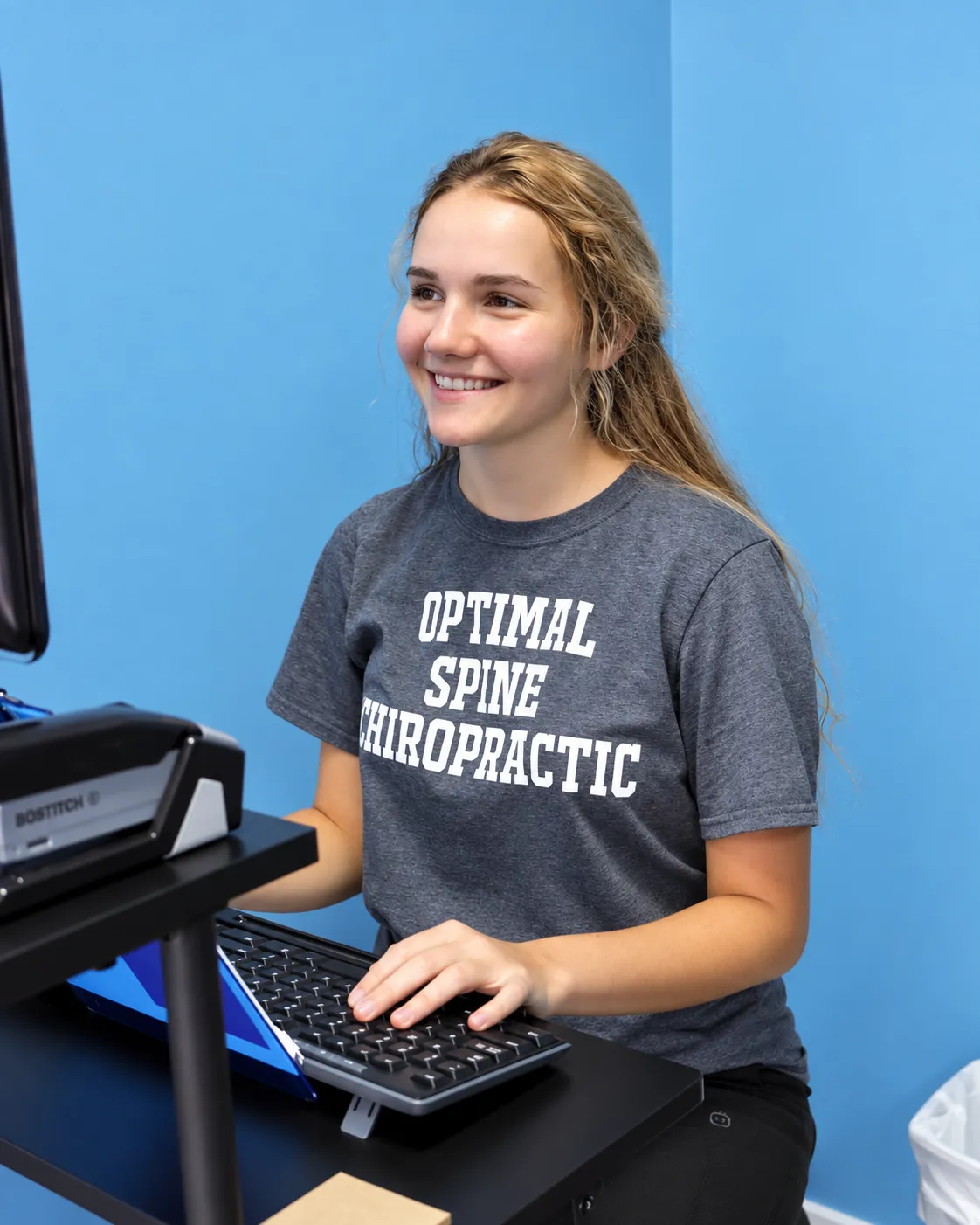
What do people mean by “tech neck”?
“Tech neck” is an everyday label for neck discomfort associated with screen use or sustained positions. It is not a complete diagnosis. Neck pain has several possible explanations, so we look beyond how your posture appears in one photograph.
Bring your usual workday into the conversation
Where is your screen? How long do you stay in the same position? What happens when you look up, turn or take a break? Tell Dr. Koser about your workspace, symptoms and any arm tingling or weakness. A description of the task helps make the discussion practical.
Work on capacity as well as position
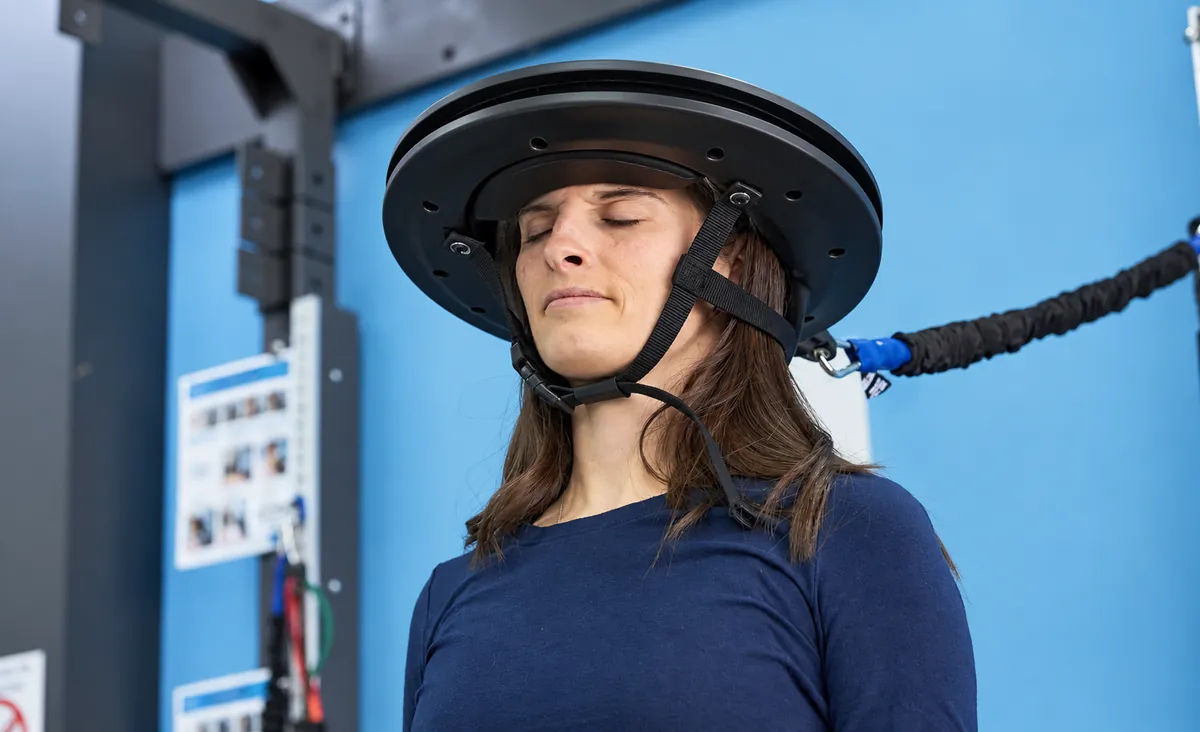
When appropriate, progressive corrective exercise can be part of your clinic plan. Dr. Koser selects the work from your findings and current ability. The exercise page shows how cervical strength and control fit into the broader approach.
Know when it is more than a desk complaint
Mention symptoms that persist away from the desk, follow an injury or travel down an arm. A screen-related pattern should not become a reason to overlook another problem. Your examination helps decide whether further assessment is needed.
Before you visit
Your questions, answered.
Does looking down cause damage to my neck?
Holding your head down for long periods increases the demand on your neck muscles and can increase loading in the cervical spine. It may contribute to discomfort. Some studies link heavy smartphone use with cervical disc degeneration, but they do not establish that looking down caused those changes. Evidence about future neck pain is mixed, and a direct cause-and-effect link with anterior bone spurs (osteophytes) is not established. We consider your daily habits, symptoms and examination together and discuss ways to reduce strain.
Will I have to buy a particular device?
We do not recommend a particular device without first assessing whether it is likely to help you. Depending on your findings, we may recommend devices for your neck muscles, devices intended to support your neck alignment, and ergonomic changes to reduce stress and strain on your neck and shoulders. The recommendations are individualized for each person.
Research: Cervical loading research · Smartphone use and disc degeneration · One-year neck-pain follow-up